
Website vs. Web App vs. E-Commerce Platform: What Does Your Business Actually Need?
Not every business needs a custom web app, and not every online store should be built the same way. Learn the difference between a website, an e-commerce platform like WooCommerce or Shopify, and a custom web application - so you can invest in the system that actually fits your business.
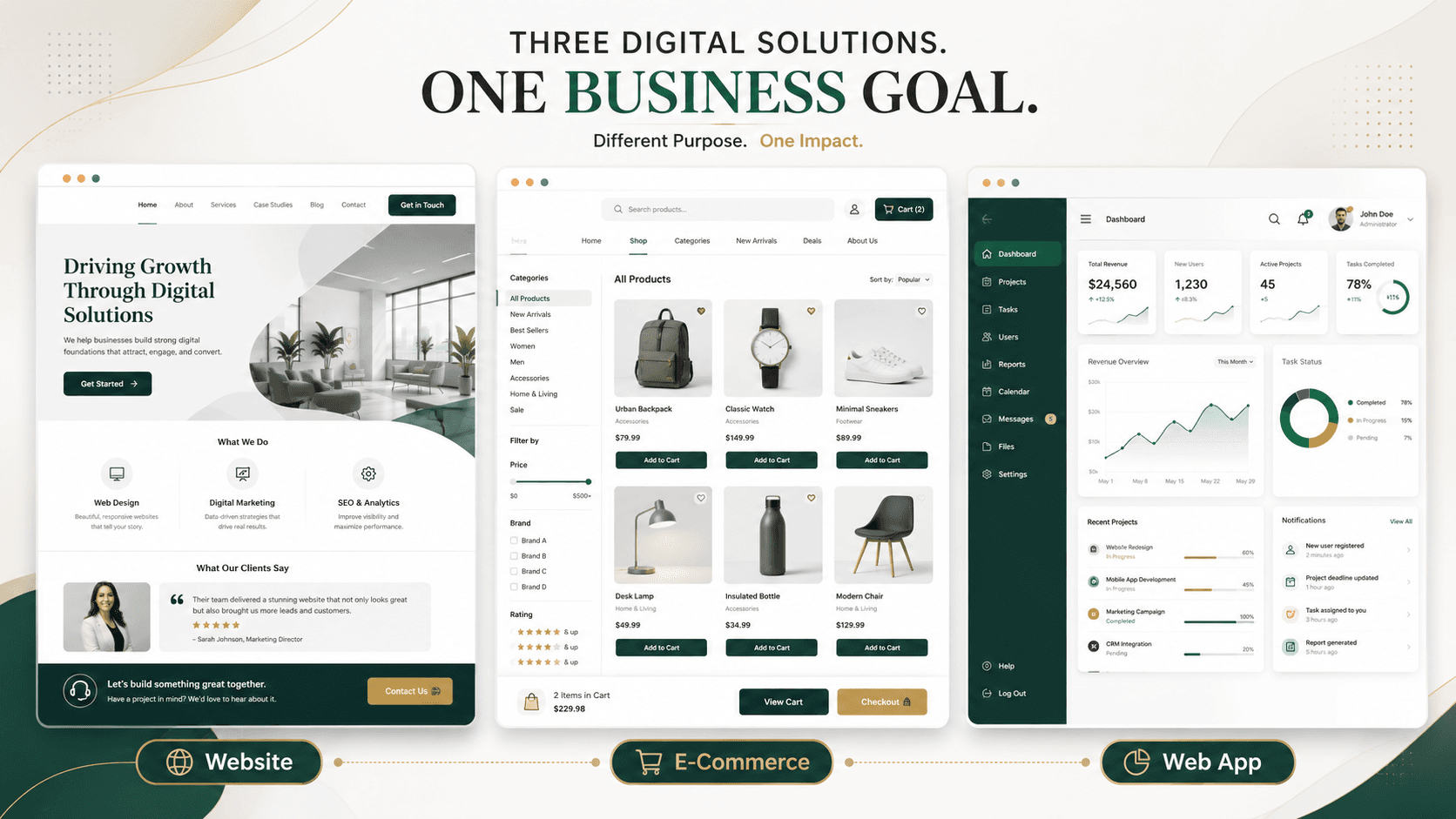
Website vs. Web App vs. E-Commerce Platform: What Does Your Business Actually Need?
Most business owners know they need a website.
But once the conversation moves into online stores, customer portals, dashboards, automation, WooCommerce, Shopify, and custom development, the terms can start to blend together.
A business may ask for “a website” when it really needs an online store. Another may ask for a “custom app” when a focused website with the right integrations would solve the problem faster and more affordably.
The better question is not:
“What is the best platform?”
It is:
“What does my business need this system to do?”
This guide breaks down the difference between a website, an e-commerce platform, and a web app — plus when each one makes sense.
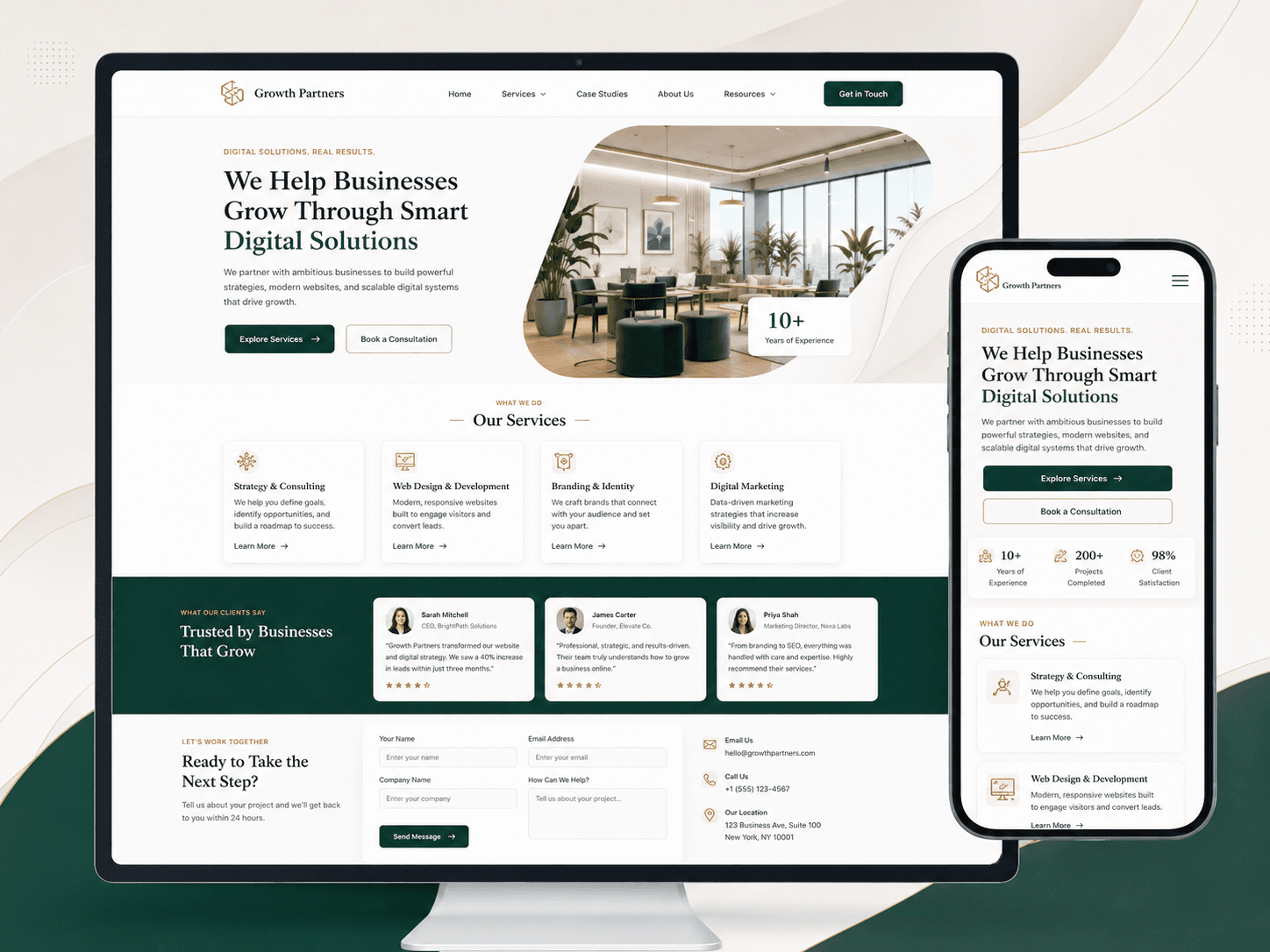
What Is a Website?
A website is primarily designed to help people understand your business and take a next step.
For many businesses, that next step is calling, booking, requesting a quote, filling out a form, visiting a location, or starting a conversation.
A typical business website may include:
- A homepage that clearly explains what the business does
- Service or product overview pages
- About and team pages
- Testimonials and reviews
- Contact forms
- Booking links
- Photo galleries
- Blog articles
- Location and service-area pages
- Calls to action such as “Request a Quote” or “Book Now”
A website is the public-facing foundation of a company’s digital presence.
For example, a roofing company may need a website that shows its services, locations, recent projects, reviews, financing options, and an easy quote-request process. A med spa may need service pages, treatment information, provider profiles, before-and-after imagery, booking links, and lead capture.
The main purpose is simple:
Help the right visitor understand the business, trust it, and take action.
That does not mean a website has to be basic. A modern website can include forms, booking, CRM integrations, analytics, SEO tools, lead-routing automation, and more.
But it is still primarily built around presenting information and converting visitors into leads or customers.
Learn more about AliNQuality web and app development.
What Is an E-Commerce Website?
An e-commerce website is a website built to sell products online.
It includes the marketing side of a website, but it also needs a system behind it to process transactions and manage orders.
That system may include:
- Product pages
- Product variations such as size, color, material, or dimensions
- Shopping carts
- Secure checkout
- Payment processing
- Shipping rules
- Tax settings
- Coupons and promotions
- Inventory management
- Order confirmations
- Customer accounts
- Returns and order tracking
Examples include clothing stores, food-ordering sites, retail businesses, supplement brands, wholesale product catalogs, and specialty manufacturers.
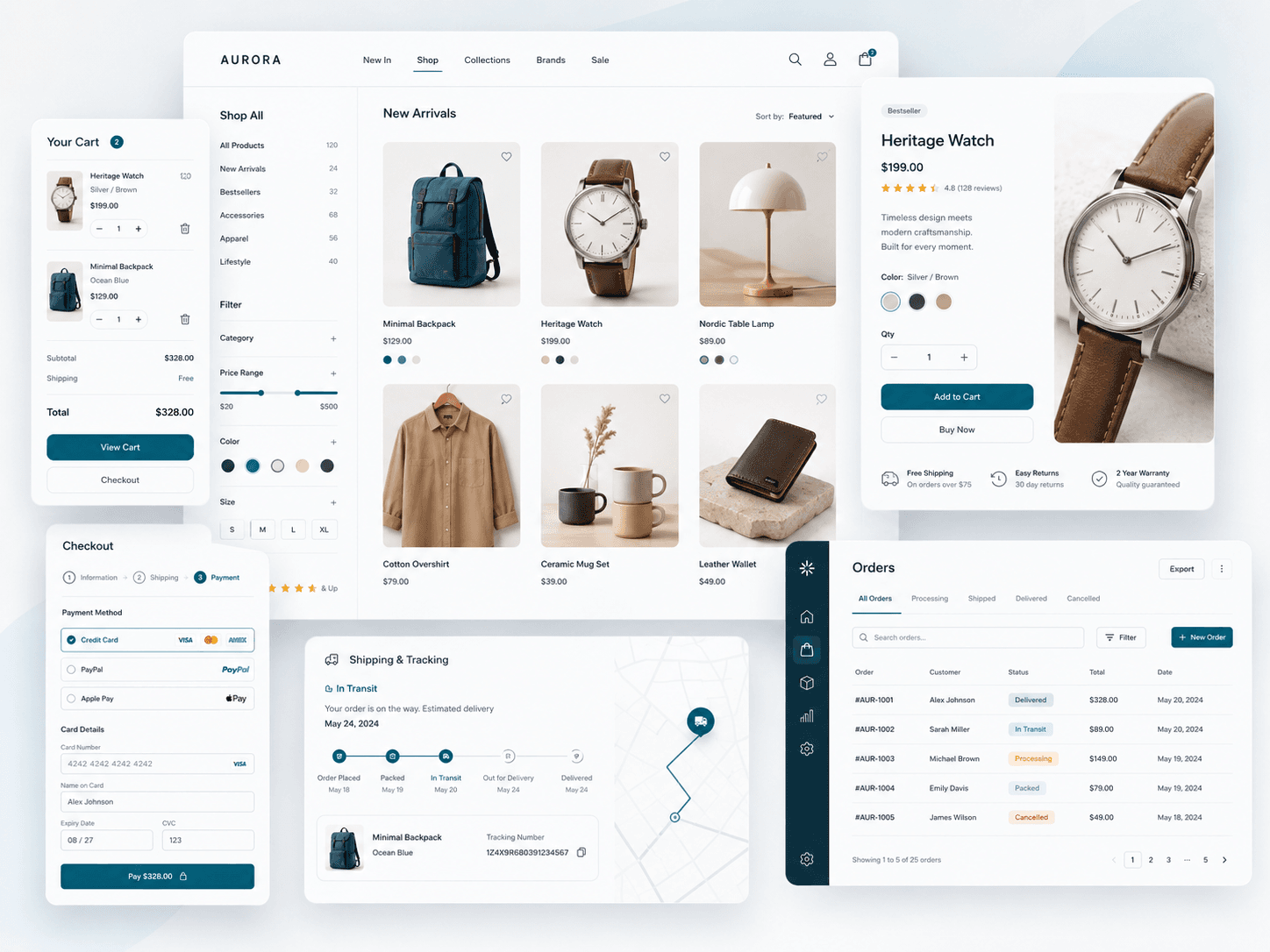
Where Do WooCommerce, Shopify, and BigCommerce Fit In?
WooCommerce, Shopify, and BigCommerce are e-commerce platforms.
They give businesses a foundation for selling online without requiring them to build every part of the store from scratch.
For example:
- WordPress is commonly used as a website and content-management foundation.
- WooCommerce adds product, cart, checkout, order, and payment functionality to a WordPress site.
- Shopify is a hosted commerce platform with its own store infrastructure and admin system.
- BigCommerce is another commerce platform that can be a strong fit for larger catalogs, B2B commerce, and more complex selling requirements.
Using an e-commerce platform does not mean the site is not customized.
The design, product setup, navigation, SEO structure, integrations, messaging, product filters, customer experience, and business workflows can all be tailored around the company.
The difference is that you are starting with proven commerce functionality instead of spending time and money rebuilding basics such as:
- A shopping cart
- Checkout
- Order-confirmation emails
- Taxes
- Discount codes
- Shipping logic
- Customer accounts
That is usually the smarter route when the business has relatively standard e-commerce needs.
The platform should support the business — not force the business to work around it.
Explore AliNQuality e-commerce platform services.
What Is a Web App?
A web app is browser-based software that people use to perform work, manage information, or complete a process.
Think of it less like a digital brochure and more like a tool.
Examples of web apps include:
- Gmail
- Google Docs
- QuickBooks
- HubSpot
- Shopify’s admin dashboard
- A client portal
- A staff scheduling system
- A custom quoting system
- An internal inventory dashboard
- A field-service management platform
Web apps often include:
- User accounts
- Different permission levels
- Dashboards
- Saved data
- Search and filtering
- Notifications
- Role-based views
- Reports
- Workflow stages
- Internal notes
- Automations
- Integrations with other systems
The primary goal is not simply to explain the business.
The goal is to help people get work done.
A Simple Example
Imagine a custom plastics manufacturer.
A customer-facing e-commerce website may let a buyer:
- Choose material
- Select thickness
- Enter dimensions
- Add products to the cart
- Check out
- Receive shipping updates
That is an e-commerce website.
Now imagine the internal process after an order comes in.
Employees may need to:
- Review customer drawings
- Confirm dimensions
- Calculate material usage
- Check available sheet inventory
- Reserve materials
- Route work to production
- Assign jobs to different teams
- Track job status
- Request customer approval
- Generate invoices
- Report on sales and production
That is moving into web-app territory.
The online store can still connect to the internal system, but the internal system is built around operations — not simply selling products.
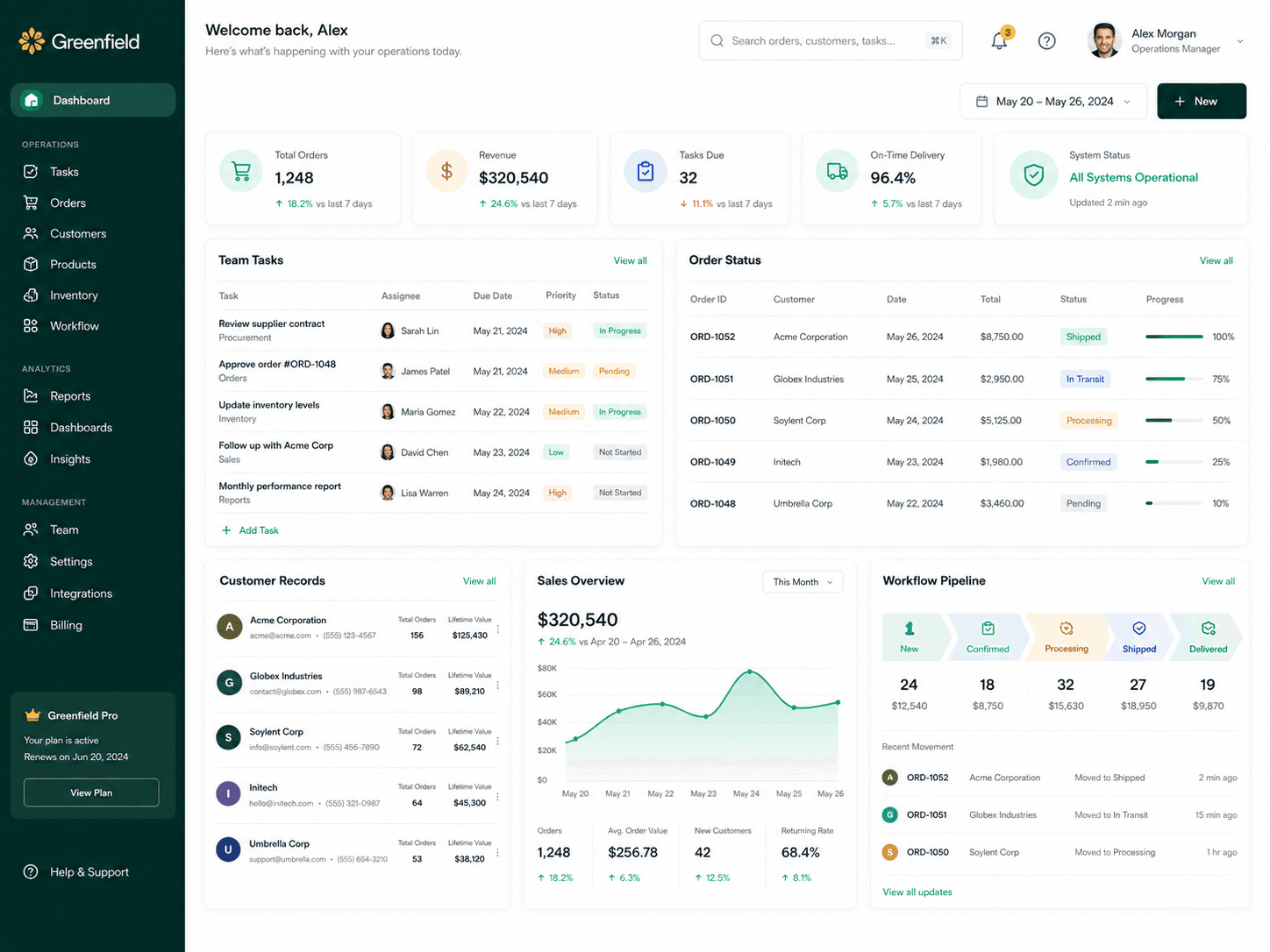
When a Website Is the Right Choice
A website is usually the right starting point when your main goal is to:
- Establish credibility
- Explain your services
- Generate leads
- Show proof of work
- Rank on Google
- Collect quote requests
- Promote a local business
- Display products without needing online checkout
- Give customers an easy way to contact or book with you
For many local service businesses, a clean, fast, trustworthy website with strong service pages, reviews, local SEO, clear calls to action, and dependable lead handling will have a much bigger impact than building a complicated custom platform too early.
A strong website is not “just a website.” When built properly, it becomes a sales tool, credibility asset, and lead-generation system.
See how AliNQuality approaches digital projects from planning through launch.
When WooCommerce or Another E-Commerce Platform Makes Sense
An e-commerce platform is usually the right choice when you need to sell products online and your process is relatively standard.
It is a strong fit when you need:
- A product catalog
- Product categories and filters
- Online payments
- Shipping
- Product variations
- Sales and discounts
- Customer accounts
- Basic inventory tracking
- Order-management tools
- Product SEO
WooCommerce can be especially useful for businesses that want the flexibility of WordPress, control over their website, content marketing, SEO, and a store that can be customized over time.
Shopify can be a strong choice when the business wants a more managed, streamlined commerce setup with less technical involvement.
BigCommerce can be a strong option for businesses with more complex catalog requirements, B2B purchasing needs, or larger-scale operations.
The best platform depends on the business — not what happens to be the most popular option.
When a Custom Web App Makes Sense
A custom web app becomes worthwhile when existing platforms are forcing your team to work around the system instead of helping the system work around your team.
That may happen when you need:
- Highly specific quoting logic
- Complex product configuration
- Custom order workflows
- Production tracking
- Employee portals
- Client dashboards
- Unique approval processes
- Multiple user roles
- Custom reporting
- Internal process automation
- Connections between your website, CRM, ERP, accounting, warehouse, POS, or scheduling tools
The important thing to understand is that custom development is not automatically better.
It is more powerful when it solves a real operational problem.
But building custom software for features that already exist in WooCommerce, Shopify, HubSpot, or another platform can add unnecessary cost, maintenance, and complexity.
A good solution balances flexibility with practicality.
Explore AliNQuality B2B operations systems, portals, quoting tools, and workflow solutions.
How Automation Fits Into the Picture
Automation is not necessarily a website, an e-commerce platform, or a web app.
It is the layer that helps information move between them.
For example, automation can:
- Send new website leads into a CRM
- Alert the right employee when a quote request comes in
- Create tasks when an order is placed
- Sync customer, inventory, or order information between systems
- Send follow-ups when a request has not been answered
- Update a dashboard when a job moves to a new stage
The goal is not to add technology for the sake of it.
The goal is to reduce repetitive work, avoid missed handoffs, and help the business run more reliably.
Learn how AliNQuality approaches workflow automation and system integration.
The Best Digital System Is Not Always the Most Popular One
A small service business may only need a high-converting website and a better lead-follow-up process.
A retail business may need a well-built WooCommerce, Shopify, or BigCommerce store.
A growing company may need an e-commerce store connected to custom dashboards and internal workflows.
An enterprise business may need a larger custom system that connects multiple departments, software platforms, and operational processes.
There is no one-size-fits-all answer.
That is why AliNQuality starts with the business itself:
- How do leads come in today?
- Where do sales get lost?
- What takes too much manual work?
- What does the customer experience look like?
- What information does the team need?
- What needs to connect behind the scenes?
- Where is the business headed next?
From there, the right solution becomes clearer.
Sometimes that means a focused website.
Sometimes it means WooCommerce, Shopify, BigCommerce, or another platform.
Sometimes it means a custom portal, dashboard, automation, or web application built around the way the business actually works.
Final Takeaway
A website helps people understand your business and take action.
An e-commerce website helps people buy from your business online.
A web app helps customers, employees, or managers complete work and manage processes.
And platforms like WooCommerce, Shopify, and BigCommerce give businesses a faster way to build an online store without rebuilding standard e-commerce functionality from zero.
The right choice is not about choosing the flashiest tool.
It is about building a digital system that supports where your business is today — and gives it room to grow tomorrow.
At AliNQuality, we help businesses turn unclear digital needs into practical systems: websites that convert, e-commerce experiences that sell, and custom tools that make operations easier to manage.
Not sure what your business needs yet? Start a conversation with AliNQuality.
Sources
- WooCommerce, "WordPress Ecommerce Plugin" — woocommerce.com
- WooCommerce, "WooCommerce Documentation" — woocommerce.com
- Shopify, "Shopify B2B" — help.shopify.com
- Shopify, "Catalogs and Pricing in B2B" — help.shopify.com
- BigCommerce, "B2B Edition: Company and Customer Functions" — support.bigcommerce.com
- BigCommerce, "Customer Groups" — support.bigcommerce.com
Related resource
Keep Reading
Related articles
AI Automation in Rockland County: Use Cases and Benefits for Local Businesses
Phone, Fax, and Lost Orders: Why Rockland County's Manufacturers and Distributors Are Behind on B2B Ordering
The Hidden Cost of Manual Work for Westchester County Businesses
Not Sure Which Service You Need?
Most projects don't fit a neat box. Talk it through with someone who's built real systems.
Already know what you need? Tell us what you're trying to build or fix. Talk Through Your Project