
AI for Research & Fact-Checking
AI is a fast research assistant and a poor final authority. Used well, it gathers, summarizes, and points you at sources in seconds. Used carelessly, it hands you a confident answer with a citation that does not say what the answer claims. The difference is a habit you can learn.
Quick answer
- What it is
- Tools that search, summarize, and answer questions, some with citations to the sources they used.
- What it helps with
- Gathering sources, summarizing articles, comparing viewpoints, and drafting research outlines.
- When to use it
- Early and broadly (to survey a topic fast), never as the last word on whether something is true.
- What to review
- Every citation and claim: open the source and confirm it actually supports the statement.
- Related terms
- hallucination
- human review
- output
What these tools do
For research, AI shines at the broad early work: surveying a topic, summarizing long articles, comparing what different sources say, drafting an outline, and pointing you toward the original documents behind a claim. Some tools answer with sources attached (each statement carries a to the page it drew from), which is a real improvement over an answer with no way to check it.
That last point is where care begins. An answer with citations looks finished and trustworthy. It is neither, until you have done the one thing the tool cannot do for you.
A citation is not proof
A citation appearing in an answer does not automatically make the answer correct. The citation is a doorway to verification, not proof. It tells you where to look; it does not tell you the answer read the source correctly.
There are three ways a cited answer goes wrong, and all of them look identical on the surface. The source can be real but unrelated: the tool attaches a plausible link that does not actually support the sentence. The source can be real and relevant but misread: the answer overstates, reverses, or strips the caveats from what the source says. And occasionally the reference itself is a , a confident, well-formatted citation to a page, study, or quote that does not exist.
The remedy is the same in every case: click through, read the relevant passage, and confirm it says what the answer claims. When a statement will inform a decision (a price, a legal point, a health or safety claim, anything you’ll repeat to a customer), trace it back to a , the original document or data rather than someone else’s summary of it.
Current facts vs. model memory
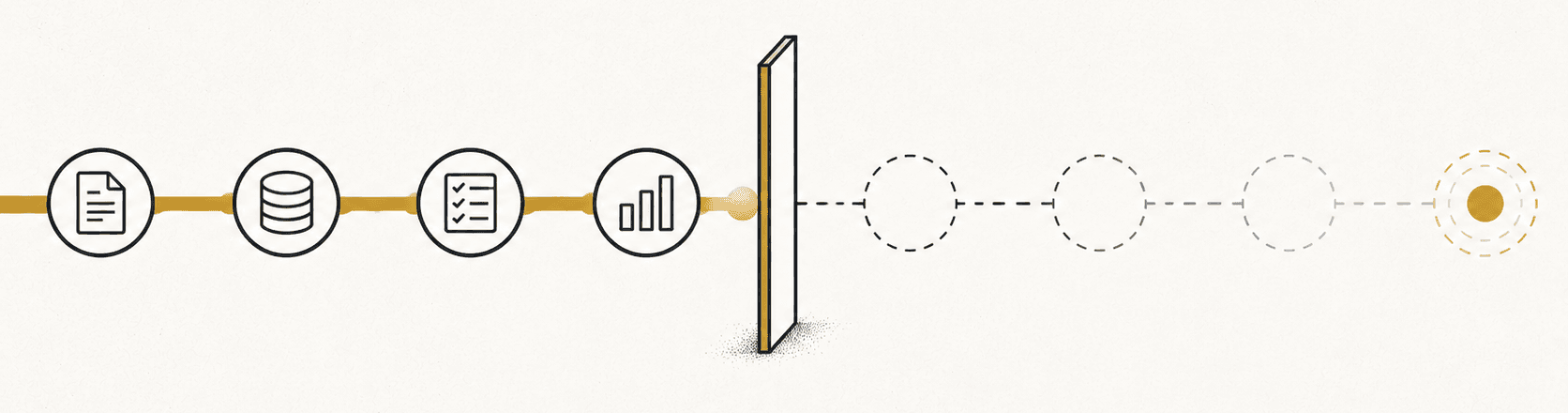
A model learns from information gathered up to a certain date, its “.” It does not inherently know anything that happened after that date. Ask a tool without live web search about a recent change (a new price, a law, this season’s numbers), and it may answer confidently from stale memory, or fill the gap with something invented.
This is why “does it search the web?” matters for research. A tool that retrieves current pages and cites them (a technique called ) can speak to today; a tool answering from memory alone cannot, no matter how current it sounds. Either way the habit stands: live search tells you the answer looked, not that it read correctly.
Research tools
The tool below is built around cited answers, with the free option and limits we could verify and the date we checked.
Perplexity
An answer engine that responds to questions with inline citations to the sources it draws from.
Commonly used for
answering questions with cited sources, researching a topic quickly, following up on an answer.
Free option
Free plan shows inline source citations on answers; free users get a limited number of Pro Searches (5 per 4-hour window).
Good to know
- Pro Search and advanced models are rate-limited on the free plan.
Most general assistants also have a research or “deep research” mode that searches the web and cites as it goes. You can compare the main ones in the general assistants section of the Tool Guide. Whichever you use, a good starting instruction goes a long way; see these ready-made research prompts for a head start.
How to verify an answer
Verification does not have to be slow. A quick, consistent of an AI research answer comes down to four moves: open each citation and confirm the source supports the specific claim; check the source’s date so you are not repeating something outdated; look for a second independent source for anything that matters; and prefer the primary document over a summary of it whenever the stakes are real.
The same discipline scales up when research becomes a repeatable process: gathering information from many public sources and organizing it for review rather than trusting a single answer. You can try a live example of a structured research tool to see what that looks like when the gathering is automated and the checking stays human.
Related resources
AI Glossary
Plain-English definitions of common artificial-intelligence terms.
Read the guide →Business AI Safety
Six practical rules for using AI safely at work, plus a downloadable AI use policy.
Read the guide →AI Integrations
Learn how AliNQuality builds AI assistants, agents, and AI-supported workflows.
Learn how AliNQuality helps →Work with AliNQuality
Request a Free Workflow Audit, or Talk Through Your Project.
AI for Research & Fact-Checking: Quick Questions
Can I trust AI research and its citations?
Only after you check. A citation appearing in an answer does not automatically make the answer correct. The citation is a doorway to verification, not proof. AI can point to a real source that does not actually support the claim, misread what a source says, or invent a plausible-looking reference. Use AI to gather and summarize quickly, then click through, read the source, and confirm it says what the answer claims before you rely on it.
- Search with sources
- Summarize articles
- Compare sources
- Draft outlines
- If an AI answer has citations, is it verified?
- No. Citations show where an answer says it got its information, not that the information is right. The source may not support the claim, may be misread, or may not exist. Treat every citation as a link to check, not a stamp of approval.
- Why does AI sometimes give outdated or wrong facts?
- A model is trained on information up to a cutoff date and does not inherently know what happened after it. Without live web search it can answer confidently from stale or missing knowledge. For anything current, use a tool that searches the web and still confirm the source.
- What is AI good for in research, then?
- Speed on the early, broad work: gathering candidate sources, summarizing long articles, comparing viewpoints, and drafting an outline. It's a research assistant, not a final authority. The judgment about what is true stays with you.