
The integration patterns we build
An integration connects systems so information moves between them without someone retyping it. These six patterns come up most often because they sit where orders, inventory, payments, shipping, quoting, and returns usually break apart.
A lot of our work is connecting systems that were never built to talk to each other. The goal is rarely to replace what you already run the business on. It’s to make the pieces share the same data, so one order, one customer, or one number never gets entered in three different places. A few concrete examples:
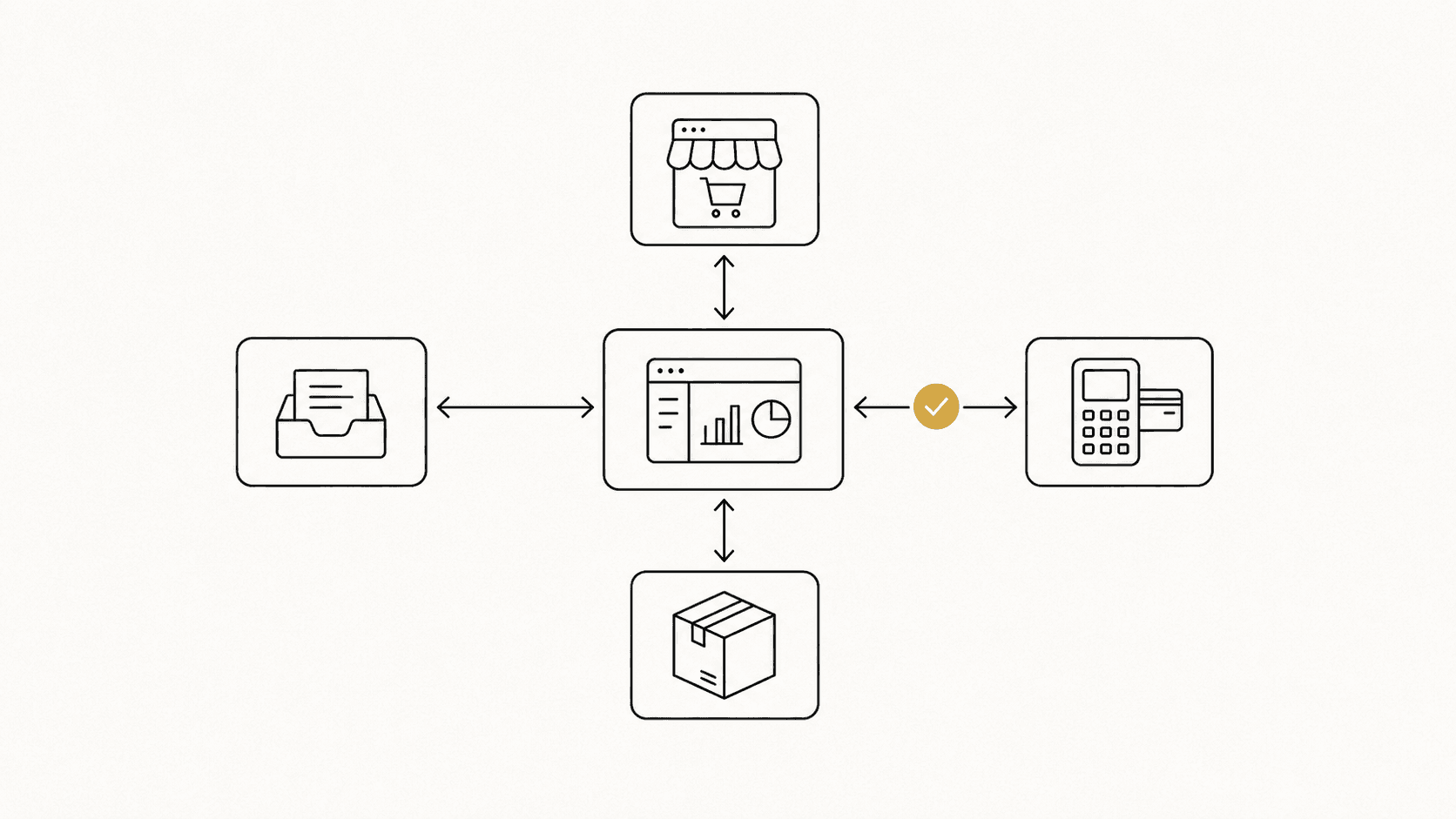
ERP to storefront
We connect your ERP to your online storefront so inventory and orders move both ways, with the ERP staying the system of record. The software you’ve run the business on for years doesn’t get replaced. It gets connected. Stock levels update as orders come in, and web orders land in the ERP as real records, so nobody exports a spreadsheet from one system and types it into the other by hand.
Orders into fulfillment
Orders flow straight from your storefront into your shipping and fulfillment software, with addresses and line items already filled in. Tracking numbers flow back to the customer the same way. Nobody re-keys an order, copies it line by line, or pastes a tracking link into an email.
Payments and reconciliation
We add or switch a payment processor securely, then reconcile the gateway’s settlement reports against your orders automatically. Fees, refunds, and payouts get matched as they land. Instead of someone comparing spreadsheets by hand every week, the numbers line up on their own, and a person only looks at the exceptions.
Quoting and intake
Web quote and RFQ requests land as structured records instead of loose emails, routed to the right person with the details already organized. A human still approves the number before anything reaches a customer. Nobody retypes a request into a spreadsheet or lets one get buried in an inbox.
Checkout that fits real products
For made-to-order products, we pull live shipping rates from several carriers at checkout, where the off-the-shelf plugins didn’t fit. The customer sees a real number based on what they actually ordered, not a flat guess. Nobody hand-quotes freight after the order arrives, and nobody eats the difference when a guess runs short.
Claims and returns
A guided internal app walks staff through returns claims step by step, so each one is filed correctly and on time. For Plastic-Craft, that took Amazon returns claim success from 26% to 95%. The app carries the deadlines and the required format, so the team stopped losing claims to missed windows and formatting mistakes.
The common thread is that none of these replaced a working system. Each one connected pieces that were already in place and moved a weekly chore off someone’s plate. That’s the kind of automation that tends to stick, because it fits how the business already runs instead of asking everyone to change how they work.
End-to-end workflow automation, not point fixes
Automating one step while the steps around it stay manual just moves the pile. If orders arrive faster but someone still copies each one into fulfillment by hand, you haven’t saved the afternoon. So we map the whole path first, from the trigger to the last handoff, then automate the parts that earn it and leave a human sign-off where money or trust is on the line.
The human sign-off is deliberate, not a limitation. A refund over a set amount, a quote before it goes out, a reply to a customer who is already upset: those stay with a person, and the automation does everything around them. You get the speed on the routine work and keep judgment on the decisions that can cost money or a relationship.
That mapping is exactly what an on-site workflow audit does. We walk your process in person before we build anything, so the automation fits the work instead of the other way around.
Something in your week feels harder than it should?
Show us the process. We'll find what's in the way and tell you what we'd change.
Based in Rockland County. On-site across the lower Hudson Valley and North Jersey, with remote engagements where appropriate.